
News
Swiss Academy of Medical Sciences SAMS
Updates to the SAMS Executive Board
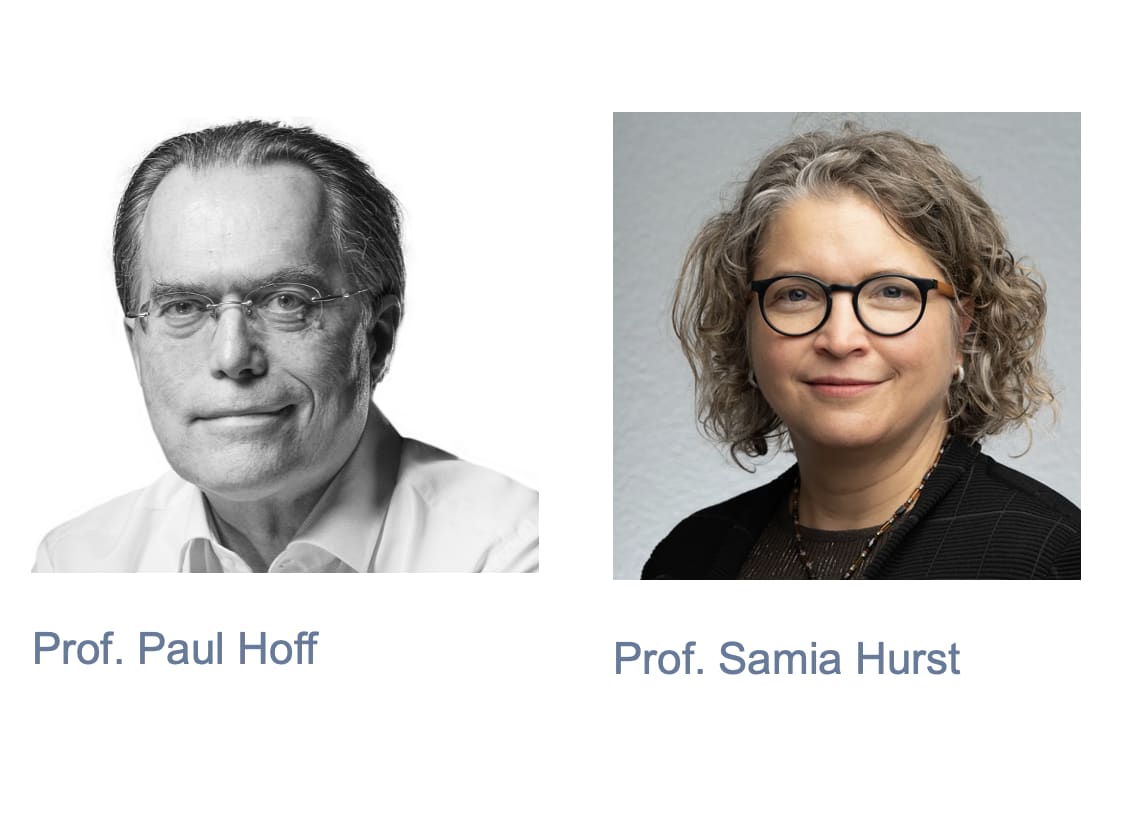
At its meeting on 18 June, the SAMS Senate elected Professor Paul Hoff as Vice President and Professor Samia Hurst as a new member of the Executive Board. We warmly welcome both to their new roles and look forward to benefiting from their experience and perspectives.
Swiss Academy of Engineering Sciences SATW

News
TecDay at Bäumlihof Grammar School: Experience technology, discover the future
On 15 October 2026, Bäumlihof Grammar School was transformed into a place of discovery, experimentation and discussion. As part of TecDay, around 530 pupils had the opportunity to explore current topics in technology, natural sciences and computer science across 33 modules. The event was organised by the Swiss Academy of Engineering Sciences (SATW) and brought experts from universities, research institutions and companies into direct contact with young people.Swiss Academy of Engineering Sciences SATW

News
Four outstanding female researchers receive the “Swiss L’Oréal – UNESCO For Women in Science 2026” award
The “Swiss L’Oréal – UNESCO For Women in Science” prize has been awarded for the second time. The award honors four exceptional early-career scientists for their excellent research. The ceremony took place on 21 October 2026 at the Zürcher Kammerorchester (ZKO) in Zurich.Swiss Academy of Engineering Sciences SATW

News
‘The future is by no means set in stone’ – Vice-Chancellor Rachel Salzmann on Switzerland in 2040
What will Switzerland look like in 2040? In its report ‘Perspectives for Switzerland 2040’, the Federal Chancellery outlines three possible futures and derives six areas for political action from them. In an interview with the SATW, Vice-Chancellor Rachel Salzmann explains why the future is by no means set in stone, why she describes the scenarios not as bleak but as challenging, and where Switzerland could take a leading role in technology.